

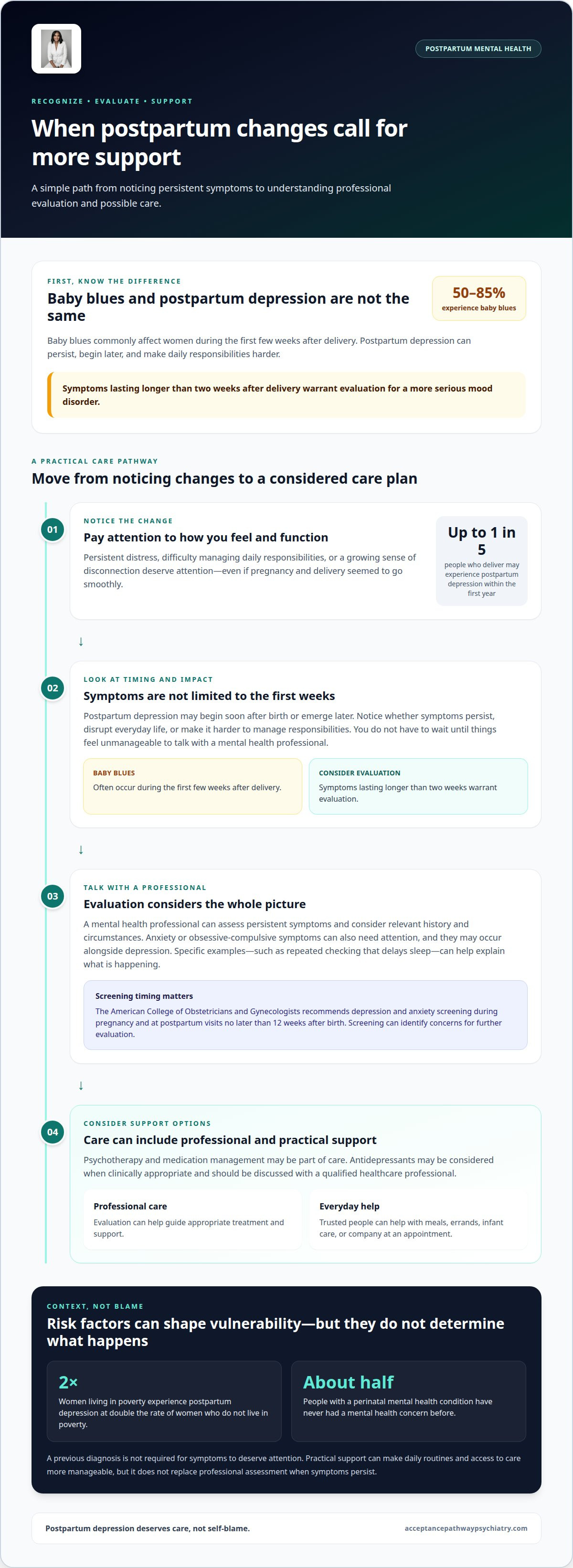
Postpartum depression deserves care, not self-blame. Psychiatric care for postpartum depression can help assess persistent symptoms and support treatment; symptoms lasting longer than two weeks after delivery warrant evaluation for a more serious mood disorder.
It can be hard to tell whether what you’re feeling is part of adjusting after birth or a sign you need more support. You don’t have to wait until things feel unmanageable to talk with a mental health professional.
This article explains how postpartum depression differs from the baby blues, which symptoms may warrant professional attention, and what psychiatric evaluation and treatment can involve. It also describes how psychotherapy and medication management may fit into care, so you can better understand possible next steps.
Key Takeaways
- Learn how postpartum depression differs from the baby blues and which risk factors may shape someone’s experience.
- Recognize that postpartum anxiety and obsessive-compulsive symptoms can also need attention and support.
- Understand what a clinical evaluation may consider and how psychotherapy or medication management can be part of care.
- See how common maternal mental health conditions are, and why noticing symptoms matters.
- Know which symptoms call for prompt professional evaluation and when a situation may require emergency care.
What is postpartum depression?
Postpartum depression is a serious mood condition that can develop after childbirth. It may affect how a mother feels, thinks, and manages daily responsibilities. Unlike the baby blues, which affect 50 to 85% of women during the first few weeks after delivery, depression can persist and call for professional evaluation. Symptoms lasting longer than two weeks after delivery warrant evaluation for a more serious mood disorder.
The timing and experience vary. Postpartum depression can affect up to 1 in 5 people who deliver within the first year after childbirth. It may begin soon after birth or emerge later, so the first weeks aren’t the only time to notice changes. Persistent distress, difficulty functioning, or a growing sense of disconnection deserve attention, even when pregnancy and delivery seemed to go smoothly.
There isn’t one cause that explains every experience. Within the first 48 hours after delivery, estrogen and progesterone concentrations fall dramatically. This shift may be one part of the physical changes surrounding childbirth, but it doesn’t explain every person’s symptoms. Recovery, sleep disruption, emotional strain, and changes in daily support can also shape how someone feels during the maternal transition.
Risk factors can increase vulnerability, but they don’t determine what will happen. Women living in poverty experience postpartum depression at double the rate of women who don’t live in poverty. Limited resources can make practical help and care harder to access. A history of mental health concerns may also be relevant during an evaluation, but a previous diagnosis isn’t required: about half of people with a perinatal mental health condition have never had a mental health concern before.
Risk and protective factors can exist together. Financial strain, for example, may add stress during recovery, while dependable help with meals or infant care can ease daily demands. A trusted partner, relative, or friend can offer company and help someone keep an appointment. These supports don’t replace professional assessment when symptoms persist, but they can make care and everyday routines more manageable.
Prevention means recognizing concerns and making support easier to reach, not guaranteeing that depression won’t develop. The American College of Obstetricians and Gynecologists recommends depression and anxiety screening during pregnancy and at postpartum visits no later than 12 weeks after birth. Screening can help identify concerns for further evaluation. Antidepressants may be considered as part of treatment when clinically appropriate; their use should be discussed with a qualified healthcare professional.
A partner or family member can listen without judgment, help with practical tasks, and support someone in seeking evaluation and care. They might prepare a meal, run an errand, or offer to accompany them to an appointment. Ask what would feel helpful, and take any immediate safety concern seriously.
Postpartum anxiety and obsessive-compulsive symptoms
Perinatal anxiety can appear during pregnancy or after childbirth. It may involve persistent worry, physical tension, difficulty settling, or repeated fears about the baby’s safety. These experiences can interrupt rest and make ordinary decisions feel difficult. About 15% of people who give birth experience postpartum anxiety. In the first year after childbirth, 1 in 5 mothers and fathers report depressive and/or anxiety symptoms. Anxiety can last for months or longer, particularly for people with a history of anxiety disorders.
Obsessive-compulsive symptoms may include intrusive thoughts, repeated checking, or rituals intended to reduce distress. For example, a parent might repeatedly check whether the baby is breathing, even after already checking. A cited fact sheet reports OCD prevalence of 8% during pregnancy and 17% postpartum. In a prospective cohort of 461 postpartum women, 11.2% screened positive for OCD at two weeks postpartum. In that cohort, 37.5% reported subclinical obsessions or compulsions. These findings describe different measures, not interchangeable diagnoses.
Unwanted thoughts can feel upsetting, especially when they involve harm or frightening images. They deserve a calm, thorough discussion, not shame or concealment. A clinical evaluation can explore what the thoughts are like, how often they occur, and whether behaviors such as checking or seeking reassurance follow them. These details can help distinguish anxiety or obsessive-compulsive symptoms from other concerns and guide appropriate support.
Anxiety may also occur alongside depression. In a prospective cohort study, 19.9% of women with postpartum depression experienced comorbid state-trait anxiety at two weeks postpartum. The comparable figure was 1.3% among women who screened negative for depression. This difference shows why an evaluation should consider overlapping symptoms, rather than treating low mood and anxiety as entirely separate experiences. A person may need support for both.
Bipolar disorder is another important part of perinatal mental health assessment. Among women with an existing bipolar diagnosis, 54.9% had at least one bipolar-spectrum mood episode during the perinatal period. Among women without a psychiatric condition before the perinatal period, bipolar disorder prevalence was 2.6%. A history of bipolar symptoms is therefore relevant when discussing mood changes and treatment options. An evaluation considers the pattern of symptoms, previous episodes, and changes during pregnancy or after birth.
Risk factors can include a history of anxiety, obsessive-compulsive symptoms, depression, or bipolar disorder. These factors don’t establish a diagnosis on their own. If worry, repetitive behaviors, or distressing thoughts persist or disrupt daily life, describe their impact during a mental health evaluation. Specific examples, such as repeated checking that delays sleep, can help explain the concerns.
Clinical evaluation and medication management
Clinical evaluation helps distinguish perinatal depression from other causes of distress. The American College of Obstetricians and Gynecologists recommends depression and anxiety screening during pregnancy and at postpartum visits no later than 12 weeks after birth. The Edinburgh Postnatal Depression Scale is a 10-question screening tool used at UC Davis Health. A score of 12 or greater raises concern and indicates a need for more thorough evaluation. Screening can flag concerns, but it isn’t a diagnosis by itself.
A thorough assessment considers current symptoms, when they began, and how they affect daily life. It may also review previous episodes, treatment history, anxiety symptoms, and any history of bipolar disorder. These details matter because different conditions can involve low mood, sleep changes, or difficulty concentrating. The evaluation also considers safety, including thoughts of self-harm. A clear example, such as struggling to complete everyday tasks, can help convey the impact of symptoms.
Psychotherapy offers a structured space to understand symptoms and practice new ways of responding to them. In a randomized study, short-term cognitive-behavioral therapy was as effective as fluoxetine treatment for women with postpartum depression. Interpersonal therapy has been shown to treat mild to moderate postpartum depression and improve interpersonal relationships. Therapy can also help someone explore changes in identity, relationships, and responsibilities after childbirth. The approach depends on the concerns being addressed.
Medication management may be considered alongside therapy or as another treatment approach. Antidepressants used for perinatal mental health conditions can take several weeks to work, so early treatment may not bring an immediate change. Zuranolone, sold under the brand name Zurzuvae, is a U.S. Food and Drug Administration-approved 14-day oral medication for postpartum depression in adults. A prescriber can discuss medication options, expected timing, and how symptoms will be followed over time.
How effective are antidepressants and psychotherapy for postpartum depression? Evidence supports both: a randomized study found short-term cognitive-behavioral therapy as effective as fluoxetine, while interpersonal therapy has been shown to help treat mild to moderate depression. Antidepressants may also be part of treatment, though they can take several weeks to work.
Medication and psychotherapy aren’t competing choices. A person’s symptoms, treatment history, preferences, and clinical needs can shape the care plan. Medication Management can address questions about antidepressants, while Psychotherapy offers structured support for emotional and relationship concerns. Follow-up evaluation helps review symptom changes and whether the treatment approach remains appropriate.
Prevalence of maternal mental health disorders
Maternal mental health concerns can arise during pregnancy or after childbirth. An estimated one in seven women in the United States experiences perinatal depression. Maternal mental health disorders, including postpartum depression, affect 20% of women in the country and are described as a leading complication of childbirth. These figures use different definitions and populations, so they describe related but distinct measures.
The timing of depressive episodes also varies. In the largest U.S. postpartum depression screening study cited, 40.1% of depressive episodes began postpartum, 33.4% began during pregnancy, and 26.5% began before pregnancy. This pattern makes it useful to discuss mood changes at different points around childbirth. Access to postpartum depression psychiatric care can help connect a screening concern with a fuller clinical assessment and appropriate support.
Access to support doesn’t always match the scale of need. In the United States, less than 20% of women are screened for maternal mental health disorders. At least one psychotherapy visit was received by 45% of Medicaid-insured women and 50% of commercially insured women. Screening can identify concerns for follow-up, while a referral can connect someone with evaluation or ongoing care. A referral is a practical route to support, not a judgment about someone’s ability to parent.
Stigma can also affect whether people disclose symptoms or accept help. In a 2025 study, 62% of respondents felt judged or treated unfairly during the perinatal period for issues including postpartum depression. A supportive referral should make room for honest discussion of symptoms, practical barriers, and care preferences. For example, someone experiencing persistent worry may need an evaluation that considers anxiety disorders alongside depression.
Urgent concerns call for a different response from a routine referral. In the United States, call 911 or text 988 if someone is in emotional distress or has thoughts of harming themselves or another person. The 988 Suicide & Crisis Lifeline provides crisis support by call or text. The U.S. National Maternal Mental Health Hotline is available 24/7. These resources offer support for different situations, including distress that needs immediate attention.
Perinatal mental health services may include screening, clinical evaluation, psychotherapy, or medication management, depending on someone’s needs. Timely postpartum depression psychiatric care can address concerns such as persistent low mood or difficulty managing daily routines. A useful first step is to describe specific changes to a clinician, including when they began and how they affect daily life. Serious, immediate safety concerns require emergency help, not a routine appointment.
Maternal anxiety disorders have their highest reported rates during early pregnancy, at 25.5%. Postpartum psychosis occurs in approximately 1 to 2 out of every 1,000 deliveries.
When should someone seek psychiatric care for postpartum depression?
Seek professional evaluation if depression symptoms continue longer than two weeks after delivery. Persistent low mood, loss of interest, guilt, or difficulty managing daily routines can signal a more serious mood disorder. You don’t need to wait for every symptom to appear. Ongoing distress that makes eating, resting, or caring for yourself difficult is worth discussing with a mental health professional.
Consider care sooner if symptoms are worsening or interfering with daily life. Someone may feel persistently overwhelmed, withdraw from loved ones, or struggle to complete familiar tasks. These changes deserve attention even if they began after a specific stressor. During an evaluation, a clinician can consider symptom timing, severity, personal history, and safety needs to determine an appropriate level of support.
Thoughts of self-harm or harming another person require immediate attention, not a routine appointment. In the United States, call 911 or text 988 when someone is in emotional distress or has thoughts of harming themselves or someone else. The 988 Suicide & Crisis Lifeline offers crisis support by call or text. If there is immediate danger, call 911.
Postpartum psychosis is a psychiatric emergency that requires immediate medical attention. Symptoms can include confusion, delusions, hallucinations, or behavior that seems markedly unlike the person’s usual self. It usually begins within the first two weeks after childbirth, but can occur up to a year postpartum. If someone with these symptoms could harm the baby or another person, seek emergency care. Hospitalization may be needed.
Not every frightening or unwanted thought means someone intends to act. Still, thoughts that feel distressing, persistent, or hard to manage should be discussed during an evaluation. Describe what is happening and how it affects sleep, relationships, or daily functioning. A specific example, such as repeatedly checking the baby and being unable to rest, gives a clinician useful context.
For non-emergency symptoms, timely outpatient evaluation can help clarify whether psychotherapy, medication management, or both may fit. Bring up changes in mood, anxiety, sleep, and functioning, along with any previous mental health history. A partner or family member can help communicate observed changes, with the person’s agreement. To discuss support for postpartum symptoms, explore postpartum mental health care.
If symptoms of postpartum psychosis raise concern that the person could harm the baby or others, treat the situation as a medical emergency. Seek emergency care rather than waiting for a routine assessment. The possibility of harm makes urgent evaluation essential.
Acceptance Pathway Psychiatry PLLC
Acceptance Pathway Psychiatry PLLC provides mental health care for people experiencing depression and related concerns. If postpartum symptoms are affecting your daily life, psychiatric support can help you discuss what you’re experiencing and consider suitable next steps.
Psychotherapy provides space to work through emotional challenges, while Medication Management can address questions about medication as part of care. A suitable starting point depends on your symptoms, history, and preferences. Support is available through in-person and virtual appointments.
You don’t have to wait until symptoms feel overwhelming to reach out. Contact Acceptance Pathway Psychiatry PLLC to discuss support for postpartum mental health concerns.
Choose a next step that feels manageable
Seeking postpartum depression psychiatric care can start with an honest conversation about what feels hardest right now. You don’t need to have every concern neatly organized before asking for support. Sharing what has changed, what you hope will feel different, and what kind of care feels comfortable can help shape a thoughtful starting point.
Acceptance Pathway Psychiatry PLLC offers Medication Management, Psychotherapy, and Creyos Cognitive Testing as part of its mental health services. These options can support different needs, from discussing treatment choices to exploring cognitive concerns. You can contact the practice to discuss whether an appointment would be useful for you.
If you’re ready to discuss support, contact Acceptance Pathway Psychiatry PLLC. Taking that step can open space to talk through your concerns with care and respect.
Frequently Asked Questions
What is Perinatal Depression?
Perinatal depression refers to depression that develops during pregnancy or after childbirth. It can affect mood, thinking, relationships, and daily functioning, and may begin before the baby arrives or afterward. Someone who feels persistently low during pregnancy, for example, may still need support after delivery. The term covers a broader period than postpartum depression, which refers specifically to depression after childbirth.
What are the symptoms and diagnostic criteria for postpartum depression?
Postpartum depression may involve persistent low mood, reduced interest, guilt, difficulty concentrating, or trouble managing everyday activities. A diagnosis isn’t based on one feeling alone. A clinician considers the symptom pattern, how long it has lasted, its impact on daily life, and relevant health history. Share concrete changes, such as withdrawing from usual activities or finding routine tasks unusually difficult, to help explain what’s happening.
What types of psychiatric treatment are available for postpartum depression?
Treatment may include psychotherapy, antidepressant medication, or both. Psychotherapy can help someone work through emotional and relationship challenges, while medication may be considered based on symptoms and health history. Zuranolone is an FDA-approved oral medication for postpartum depression in adults. A treatment discussion can cover available options, how they fit the person’s circumstances, and how progress will be reviewed.
Which postpartum depression medications are safe while breastfeeding?
No medication should be assumed safe for every breastfeeding parent and infant. Significant complications from neonatal exposure through breast milk to tricyclic antidepressants, fluoxetine, paroxetine, or sertraline appear to be rare. A prescriber can discuss the specific medication, breastfeeding plans, and relevant health factors. Don’t start, stop, or change a prescribed medication without discussing it with the prescribing clinician.
What are the emergency warning signs of postpartum psychosis or suicidal thoughts?
Hallucinations, delusions, severe confusion, or behavior that creates a risk of harm may indicate postpartum psychosis and require immediate medical attention. Thoughts of suicide or harming another person also need urgent support. In the United States, call 911 for immediate danger or call or text 988 for emotional distress or thoughts of harm. Stay with the person if it’s safe to do so while arranging help.
What should someone expect at a postpartum depression psychiatric evaluation?
An evaluation usually involves discussing symptoms, when they began, their effect on daily life, and relevant medical and mental health history. The clinician may ask about previous episodes, current medications, sleep, and safety concerns. Describing when low mood worsens or which tasks have become difficult can make the conversation more specific. This discussion helps clarify concerns and consider possible next steps together.


