

More than 1 in 5 women in the United States experience a mental health condition every year. A psychiatrist specializing in women’s mental health can help explore how symptoms connect with reproductive life stages, including menstrual changes, pregnancy, postpartum, and menopause. That perspective can make care feel more relevant to what you’re experiencing.
Mood and anxiety symptoms can have several contributing factors, including hormone-related changes. Reproductive psychiatry considers these connections alongside your overall mental health, helping shape care around your needs.
This article explains what reproductive psychiatry covers, how perimenopause and postmenopause may affect mental well-being, and how mental health conditions can differ between women and men. You’ll also learn how psychiatric assessment, psychotherapy, and medication management can support a thoughtful path forward.
Key Takeaways
- Notice whether mood or anxiety symptoms shift around reproductive milestones, including pregnancy, postpartum, and menopause, and share those patterns during an assessment.
- Postpartum depression can begin during pregnancy or in the first few months after childbirth; recognizing changes in mood is a reason to seek support.
- Reproductive psychiatry considers how hormone-related changes may connect with mood, anxiety, sleep, and thinking.
- Perimenopause can bring emotional changes such as anxiety, depression, or irritability, so tracking when symptoms occur can help clarify the picture.
- Women-specific patterns in conditions such as depression, anxiety, and PTSD can inform a more individualized approach to care.
How can psychiatrists help women with gender-specific mental health challenges?
A psychiatrist can assess symptoms alongside pregnancy, postpartum, menstrual, or menopause-related changes. Depending on your symptoms, health history, and needs, care may include clinical assessment, psychotherapy, and medication.
Perinatal and Postpartum Mental Health
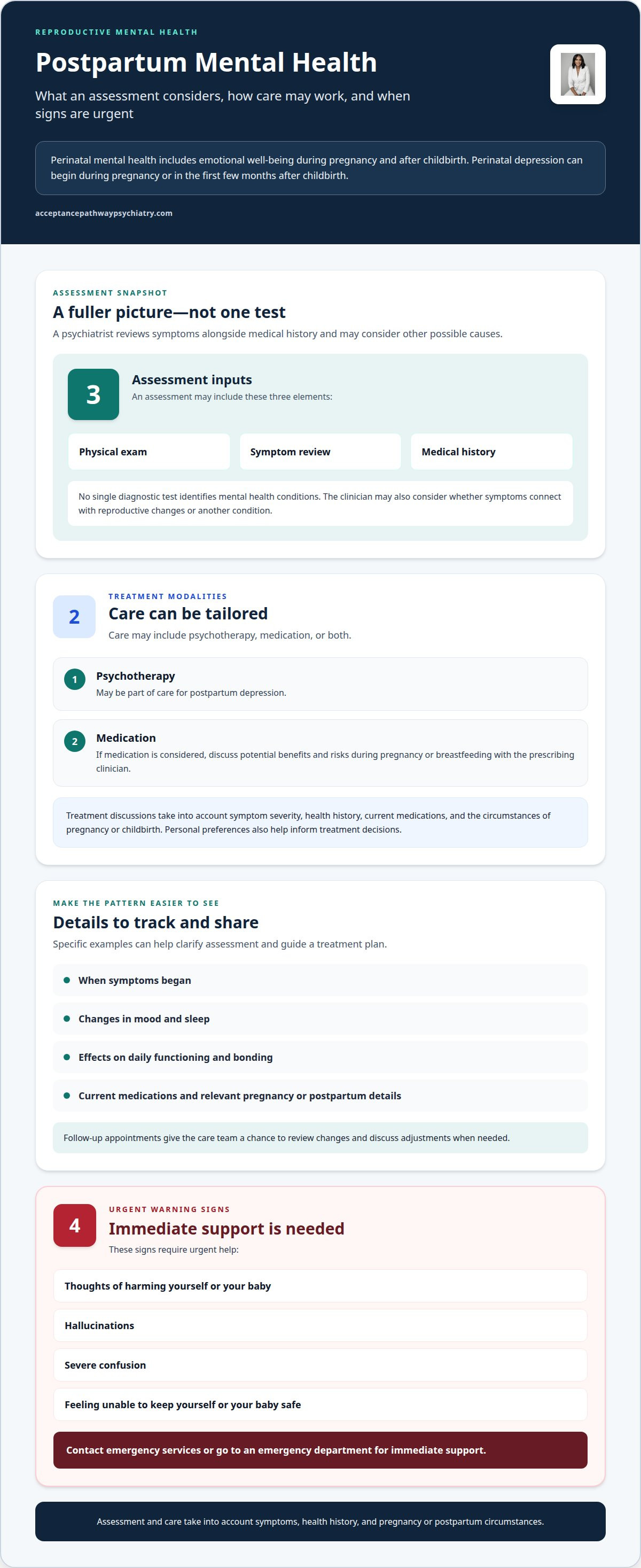
Perinatal mental health includes emotional well-being during pregnancy and after childbirth. Perinatal depression can occur during pregnancy or in the first few months after childbirth. Changes in mood, anxiety, sleep, or daily functioning are useful to mention during an assessment, especially if they affect your ability to care for yourself or your baby.
A psychiatrist evaluates symptoms alongside your medical history and may consider other possible causes. No single diagnostic test identifies mental health conditions; an assessment may include a physical exam, symptom review, and medical history. A psychiatrist specializing in women’s mental health may also consider whether symptoms relate to reproductive changes or another condition.
Care for Postpartum Depression
Care for postpartum depression may include psychotherapy, medication, or both. A psychiatrist considers symptom severity, health history, current medications, and the circumstances of pregnancy or childbirth when discussing treatment. If medication is considered, discuss its potential benefits and risks during pregnancy or breastfeeding with the prescribing clinician.
Track when symptoms began and how they affect daily life, sleep, and bonding. Specific examples can help clarify the assessment and guide a treatment plan. Follow-up appointments let the care team review changes and discuss adjustments when needed.
Qualifications: Look for a psychiatrist with medical training in psychiatry and experience in reproductive mental health. Board certification and focused training can indicate relevant expertise, but ask how the clinician approaches pregnancy, postpartum depression, PMDD, and menopause-related concerns.
Insurance: Coverage for postpartum depression, PMDD, or menopause-related psychiatric care depends on your plan and its specific benefits. Review your mental health benefits, network participation, and any referral or authorization requirements in your plan documents.
Telepsychiatry: Telepsychiatry appointments are available through virtual care. You’ll need a reliable internet connection and a private space. State licensing requirements determine where a psychiatrist can provide care, so confirm the clinician can treat patients in the state where you’ll be during the appointment.
Conditions treated: A psychiatrist specializing in women’s mental health may treat depression, anxiety, postpartum depression, PMDD, and mental health symptoms related to pregnancy or menopause. Assessment also considers whether symptoms may reflect another psychiatric or health condition.
Finding care: Search for reproductive psychiatry or perinatal mental health alongside your city or state. For virtual appointments, include your state in the search because your location can affect which clinicians can provide care.
Treatments: Perinatal and postpartum care may include psychotherapy, medication, or a combination. Treatment decisions account for symptoms, medical history, pregnancy or postpartum circumstances, and personal preferences.
Preparing for a first appointment: Note when symptoms started, changes in mood or sleep, current medications, and relevant pregnancy or postpartum details. Bring questions about treatment options and describe what is most disruptive in daily life.
Urgent warning signs: Thoughts of harming yourself or your baby, hallucinations, severe confusion, or feeling unable to keep either of you safe require urgent help. Contact emergency services or go to an emergency department for immediate support.
What Is Reproductive Psychiatry?
Reproductive psychiatry considers mental health alongside reproductive events, including menstruation, pregnancy, postpartum, infertility, and menopause. A psychiatrist with this focus connects these life stages with symptoms and treatment planning. A psychiatrist is a physician, unlike a therapist; compared with general psychiatry, reproductive psychiatry focuses on reproductive transitions.
Hormonal Changes and Mental Health
Hormonal shifts can coincide with changes in mood, anxiety, sleep, and thinking. During perimenopause, changing estrogen levels affect serotonin, dopamine, and GABA, which are involved in brain signaling. Notice whether symptoms shift alongside cycle patterns, disrupted sleep, or a reproductive transition, then describe those patterns during an assessment.
This context can help distinguish a temporary change from a recurring pattern that needs attention. For example, noting whether anxiety increases with disrupted sleep gives a clinician useful detail when developing a treatment plan.
Mood and Anxiety Across Reproductive Transitions
Depression or anxiety may arise around menstruation, pregnancy, postpartum, infertility, or menopause. The timing and pattern matter: symptoms beginning around a transition may call for a different assessment than symptoms occurring independently of it. Perimenopause can include depression, anxiety, or irritability, and those mood changes may resemble bipolar disorder.
That resemblance doesn’t establish a bipolar diagnosis. A clinician considers your full symptom history and how changes unfold over time. Share examples of mood shifts, sleep changes, and their impact on daily activities to help clarify what’s happening.
Anxiety, Depression, and OCD
Anxiety, depression, and obsessive-compulsive disorder can affect people navigating reproductive transitions. Reproductive psychiatry considers whether symptoms vary with menstrual cycles, pregnancy, postpartum changes, or menopause, while also considering other influences. OCD is distinct from general anxiety, so describing recurring worries and behaviors can help guide assessment.
Women’s mental health needs aren’t limited to reproductive hormones, and people of all genders can experience hormone-related concerns. A psychiatrist specializing in women’s mental health can consider reproductive timing alongside your broader psychiatric history, symptoms, and goals.
To prepare for a conversation, note when symptoms occur, what changes alongside them, and which daily activities feel harder. This can help make the journey through assessment more focused and collaborative. Integrative support may also be part of a broader approach; explore integrative wellness services as one option for considering overall well-being alongside mental health care.
The practice lists bipolar disorder, obsessive-compulsive disorder, and post-traumatic stress disorder among the general mood and anxiety disorders it treats. Its mood and hormone quiz takes about 3 minutes. Taylor Medical Group’s page recommends addressing the stress response because chronic stress and cortisol dysregulation can compound reproductive hormone issues. These points can help frame a discussion of symptoms and possible next steps.
Treatment recommendations are individualized and may include lab testing, lifestyle changes, and psychiatric medication when appropriate. Alexandra Walker has more than a decade of experience supporting women through life transitions. The practice does not prescribe controlled substances during a new patient's first visit.
Perimenopausal and postmenopausal mental health
Perimenopause and menopause can coincide with emotional changes that affect daily routines, relationships, and concentration. Start by mapping symptoms against menstrual changes, sleep patterns, stress, and earlier mental health concerns. This timeline helps distinguish a new pattern from recurring depression or anxiety and gives a psychiatrist clearer context for discussing care.
Recognizing Changes During Perimenopause
During perimenopause, mood changes can include depression, anxiety, or irritability. Changing estrogen levels affect serotonin, dopamine, and GABA, brain chemicals involved in mood regulation. These changes can overlap with disrupted sleep or existing stress, so note which symptoms appear together and when. For example, recording whether irritability follows several nights of poor sleep offers more useful detail than describing a difficult week alone.
Some changes can resemble bipolar disorder, but similar feelings don’t establish the same diagnosis. A psychiatrist considers the pattern, intensity, duration, and impact of symptoms, along with your personal history. Share examples such as a shift in energy, persistent low mood, or anxiety interfering with work. This helps the clinician consider hormone-related concerns alongside other mental health conditions.
Postmenopause and Ongoing Mental Health
Mental health concerns can continue after menopause and deserve attention. The important distinction is whether symptoms began during the transition, continued afterward, or developed separately. A timeline that includes sleep, mood, concentration, and changes in daily functioning can help describe the pattern. It also helps prevent attributing every emotional change to menopause without considering other factors.
Stress is important context, too. Chronic stress and cortisol dysregulation can compound reproductive hormone issues, so discuss ongoing pressures alongside emotional symptoms. Caregiving demands or persistent work strain, for example, may be relevant when reviewing anxiety or low mood. A treatment plan can account for both the reproductive transition and the circumstances affecting your well-being.
Discussing Hormone Replacement and Mental Health
Hormone replacement is a medical treatment decision, not a substitute for assessing depression, anxiety, or other symptoms. Bring questions about emotional changes, current medications, health history, and menopause symptoms to the clinician coordinating your care. The discussion can clarify which concerns need psychiatric attention and whether hormone-related care should also be considered with an appropriate medical provider.
Psychiatric support can address symptoms affecting daily life, whether they involve persistent anxiety, low mood, or difficulty concentrating. Treatment planning considers your symptom pattern and personal history rather than assuming one approach fits every menopause experience. This differs from perinatal concerns such as postpartum depression, which relate to pregnancy and the period after childbirth.
Reproductive psychiatry and hormone-related mental health
Reproductive psychiatry considers mental health across menstruation, pregnancy, postpartum, infertility, and menopause. It looks at symptom timing and personal history rather than assuming hormones explain every emotional change.
Hormonal Changes and Emotional Well-Being
Hormonal changes may coincide with shifts in mood, anxiety, sleep, or thinking. Record when symptoms begin, how long they last, and whether they follow a reproductive transition. For example, recurring distress before menstruation gives a clinician more context than a general description of feeling low.
Premenstrual dysphoric disorder, or PMDD, affects approximately 3-8% of women during their reproductive years. Symptoms typically begin 7-10 days before menstruation and resolve within 1-2 days after menstruation begins. This pattern is one reason clinicians ask about timing, symptom intensity, and effects on daily life.
Reproductive and hormone-related mental health concerns can affect people of all genders. Assessment considers your experience and health history, not gender alone. Sharing changes in sleep, concentration, or emotional well-being can help clarify which concerns need attention.
Hormone-Aware and Integrative Care
Hormone-aware care places symptoms in the context of transitions such as pregnancy, postpartum, and menopause. It also considers other factors, including stress and existing mental health concerns. Noting, for example, that anxiety worsens during a reproductive transition can help shape a more relevant clinical discussion.
An integrative approach can consider emotional symptoms alongside daily routines, sleep, stress, and overall well-being. These details add context, but they don’t replace a psychiatric assessment or establish that hormones caused the symptoms. A treatment plan can reflect the concerns that matter most to you.
Medication Safety in Pregnancy and Breastfeeding
No psychiatric medication can be described as safe for every pregnancy or breastfeeding situation. A prescribing clinician weighs the diagnosis, symptoms, current medication, pregnancy stage, breastfeeding plans, and possible effects of changing treatment.
For a practical discussion, bring a current medication list and describe any plans related to pregnancy or breastfeeding. Don’t stop or change prescribed medication without discussing it with the prescriber. Medication management can be considered alongside psychotherapy and other supports, based on your circumstances and treatment goals.
Hormone therapy and psychiatric medication are separate treatment considerations. Discuss questions about hormone therapy during breastfeeding with the clinician responsible for that care, and review psychiatric symptoms with a mental health professional. Sharing both sets of concerns supports a more coordinated conversation about emotional well-being.
Women-specific differences in mental health conditions
Population patterns show why symptoms deserve careful, individualized assessment, but they don’t predict any one person’s experience. In the United States, depression affects women twice as often as men, and anxiety affects women twice as often as men. These differences make it useful to discuss symptom timing, daily impact, stress, and reproductive context during an evaluation.
PTSD also affects women in the United States twice as often as men. A diagnosis still depends on a person’s symptoms and history, not gender alone. During an assessment, describe experiences connected with distress, how symptoms affect sleep or relationships, and whether they change across reproductive stages. These details help the clinician understand your individual situation rather than relying on broad patterns.
Eating disorders show another notable difference. Women make up 85-95% of people with anorexia and bulimia, and 65% of people with binge eating disorder. These figures describe groups, not a diagnostic test for an individual. Changes in eating, distress about food, or disruptions to everyday routines are examples worth raising during a mental health assessment.
Schizophrenia symptoms generally start later in women than in men. This difference can inform how clinicians consider a person’s history and symptom timing, but it doesn’t establish a diagnosis. Record specific changes, such as altered thinking or functioning, and when they began. A careful review also considers whether stress or other mental health conditions may contribute.
Suicide patterns also differ by gender: women attempt suicide more often than men, while men are more likely to die by suicide. Thoughts of suicide deserve direct attention, regardless of gender or broader statistics. Tell a mental health professional about these thoughts and any changes in safety or functioning. If there’s immediate danger, seek emergency help.
The practical takeaway is to treat population differences as context, not assumptions. An assessment can consider depression symptoms, trauma history, eating concerns, stress, and reproductive factors together. Share what has changed and how it affects daily life. This information supports a more complete understanding of symptoms and helps distinguish your needs from generalized patterns.
Women’s mental health conditions are commonly treated with talk therapy, medication, or both. A discussion of care can cover which approaches feel acceptable, what concerns you want addressed, and how treatment fits your daily needs. Population patterns don’t determine which option is right for you, so raise questions about available approaches and your preferences when discussing care.
The practice treats premenstrual dysphoric disorder and peripartum mood and anxiety disorders. These condition names can help describe concerns, but naming a condition alone doesn’t establish that it applies to you. During an assessment, discuss your symptoms, when they occur, and how they affect daily life, and ask what further discussion may help. Focusing on your experience connects broad information about women’s mental health with questions and support relevant to you.
Acceptance Pathway Psychiatry PLLC
Acceptance Pathway Psychiatry PLLC provides mental health care for concerns such as depression and anxiety, which can affect people during reproductive transitions. Psychotherapy and medication management support personalized care based on symptoms, health history, and treatment goals. Integrative wellness services may also be included when they fit your needs.
If mood changes, anxiety, or other symptoms are affecting daily life, speaking with a mental health professional can help clarify next steps. Acceptance Pathway Psychiatry PLLC offers telepsychiatry appointments. You’ll need a reliable internet connection and a private space for your appointment.
Contact Acceptance Pathway Psychiatry PLLC to discuss your mental health care needs.
Take the Next Step at Your Own Pace
Noticing how symptoms connect with your life stage can help you describe what feels difficult and what support you want. A psychiatrist specializing in women’s mental health can consider these concerns within a broader psychiatric assessment, including your history, priorities, and daily experience.
Acceptance Pathway Psychiatry PLLC offers psychotherapy, medication management, and Creyos Cognitive Testing as part of its mental health services. These options can support conversations about symptoms and possible approaches to care, tailored to your needs.
If you’re ready to explore support, contact Acceptance Pathway Psychiatry PLLC to begin a conversation about your care. Taking one thoughtful step can help you move toward support that feels right for you.
Frequently Asked Questions
Could my depression actually be hormonal?
Reproductive changes could be related, but timing alone can’t establish the cause. Note whether low mood follows a recurring pattern, appears alongside cycle or menopause changes, or continues independently. Also record how it affects work, relationships, and daily routines. A clinician can use these details, your health history, and symptom assessment to consider possible explanations and discuss appropriate next steps.
What does psychiatric treatment for women's issues involve?
Psychiatric treatment starts with understanding your concerns, health history, and goals, then discussing a care plan that fits your needs. Prepare by listing previous treatments, what helped, and any difficulties or side effects you experienced. Treatment may involve psychotherapy, medication management, or both. Follow-up conversations help review how the plan fits your experience and whether adjustments should be discussed.


