

What if the questions a psychiatrist might ask aren’t a test you need to pass, but a way to understand what you’re experiencing? It’s natural to feel unsure before an appointment, especially if you’re concerned about discussing personal topics or saying the wrong thing. One answer alone doesn’t define you or determine your care.
A psychiatric evaluation is a collaborative conversation. Your psychiatrist may ask about your symptoms, health, daily life, and goals to build a clearer picture of what’s been going on. You can share at your own pace, ask why a question matters, or say when something feels difficult to discuss.
This guide explains common topics that may come up, why they help inform assessment and care planning, and how to prepare without scripting every answer. You’ll also find practical ways to describe your concerns honestly, so you can enter the conversation with more confidence and room to be yourself.
Key Takeaways
- Learn the common questions a psychiatrist might ask about symptoms, health history, daily life, and personal goals.
- Notice when symptoms began, how often they occur, and how they’ve changed so you can describe your experience clearly.
- Prepare by jotting down your main concern, recent changes, and questions you’d like answered. You don’t need to rehearse perfect responses.
- Understand how your answers can inform a care plan that may include psychotherapy, medication management, or further assessment.
Questions a Psychiatrist Might Ask First, and Why They Matter
A psychiatric evaluation is a conversation, not a test with perfect answers. You don’t need to arrive with the right words or know exactly what’s causing your concerns. The questions a psychiatrist might ask help build a clearer picture of what you’re experiencing, how it affects your life, and what kind of support you hope to receive.
The conversation may cover your current concerns, personal and health history, daily functioning, and goals for care. Its focus and depth depend on your needs and the appointment. A single question or answer doesn’t establish a diagnosis. Your psychiatrist considers information in context and may need time to understand the full picture. A psychiatric evaluation can include several parts of this broader assessment.
To hear another perspective on asking questions in a supportive care relationship, watch this video:
There’s no need to fit your experience into a diagnostic label before you speak. Everyday language and specific examples can help your psychiatrist understand what matters to you.
What might a psychiatrist ask about your main concern?
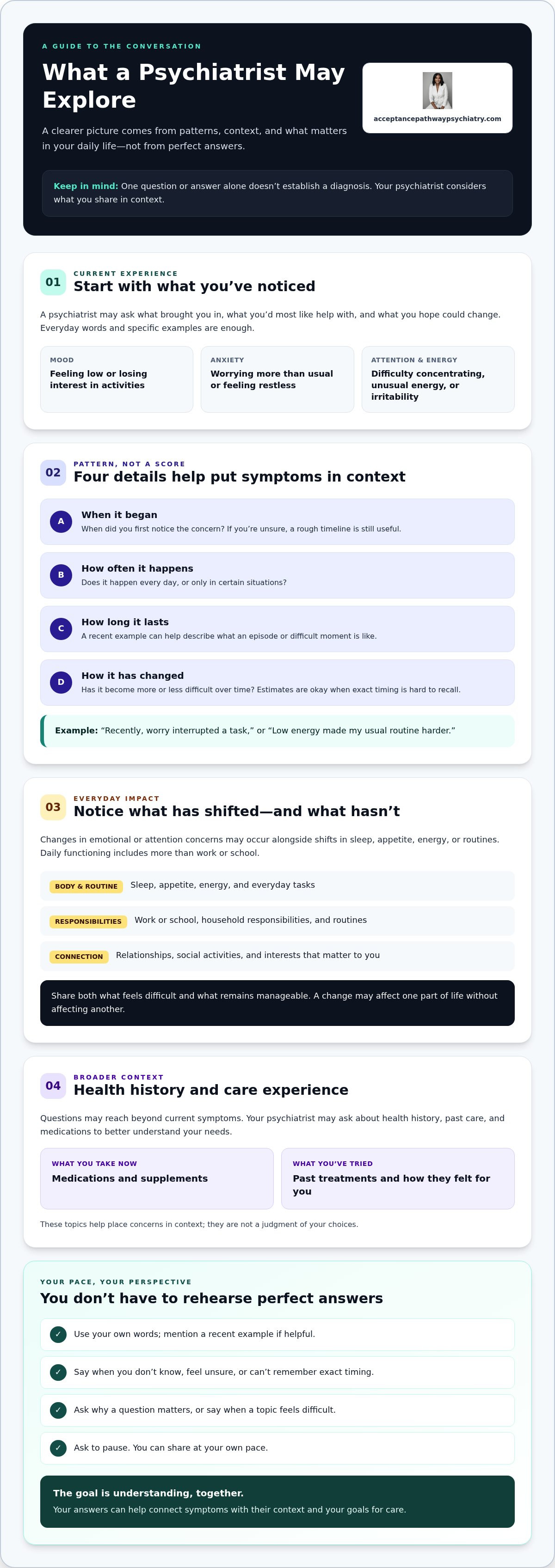
Your psychiatrist may begin with an open question such as, “What brought you in today?” or “What would you most like help with?” They might ask what you hope could change, when the concern first appeared, and whether it has become more or less difficult over time.
Describe what you’ve noticed in your own words. For example, you might explain that it’s been hard to get out of bed, that worry makes it difficult to focus, or that your reactions feel different from usual. If you’re unsure when something began, say so. A rough timeline or a recent example can still give useful context.
How can the interview feel collaborative rather than like an interrogation?
A thoughtful interview leaves room for your perspective, not just a series of questions and answers. Your psychiatrist may ask follow-up questions to clarify what you’ve shared, and you can ask questions too. You might say, “Could you explain why you’re asking about that?” Understanding the purpose of a topic can make it easier to decide what you’re comfortable sharing.
You can also tell the psychiatrist when you don’t know how to answer, feel unsure, or need a moment before continuing. If a topic feels difficult, say so and ask to pause. Sharing honestly doesn’t require telling the whole story all at once. The aim is to understand your concerns together and connect the conversation to your goals, while allowing the assessment to reflect your individual needs.
Questions About Symptoms, Mood, Sleep, and Daily Life
Questions about symptoms help a psychiatrist understand not only what you feel, but when it happens, how often it occurs, and what changes it brings to your life. There isn’t a checklist you need to complete or a score you need to reach. The American Psychiatric Association’s overview of psychiatry describes a field that considers mental health alongside a person’s broader well-being, which is why questions may touch on several parts of daily life.
How might a psychiatrist ask about mood, anxiety, or attention?
A psychiatrist may ask whether you’ve felt low, lost interest in activities, worried more than usual, or found it hard to concentrate. They might also ask if you’ve felt restless, unusually energetic, or more irritable. These are conversation prompts, not proof of a specific condition. A clinician considers your answers alongside other relevant information.
Follow-up questions can clarify the pattern: When did you first notice this? Does it happen every day or only in certain situations? How long does it last, and has it changed over time? You can answer with a specific example, such as describing a recent day when worry interrupted a task or low energy made a familiar routine harder.
Why might they ask about sleep and daily functioning?
Sleep, appetite, energy, and routines can shift alongside emotional or attention concerns, so your psychiatrist may ask what’s changed. They might ask whether you’re sleeping more or less than usual, waking during the night, eating differently, or struggling to keep up with everyday tasks. Describe the change as you’ve noticed it, rather than judging whether you’re doing “well enough.”
Daily functioning includes more than work or school. It can involve relationships, household responsibilities, social activities, and the routines or interests that matter to you. A change may show up in one area but not another. Mentioning both what feels difficult and what remains manageable can help provide a balanced picture.
The questions a psychiatrist might ask may explore several areas, but you don’t have to prepare a perfect inventory. If it helps, think about the recent past and share one or two concrete examples: a change in your sleep, a task that’s become harder, or a moment when your mood affected a relationship. If you can’t remember exact timing or frequency, an estimate is still useful. You can also say when a suggested example doesn’t fit your experience.
These details help connect symptoms with their context, rather than treating each one as a standalone sign. If you’re considering an evaluation, learn about psychiatric evaluations as a way to discuss your concerns and care goals with a clinician.
Questions About Health History, Medications, and Personal Safety
Some questions a psychiatrist might ask reach beyond current symptoms. Your health history, past care, medications, and family experiences can help place your concerns in context and support thoughtful care planning. These topics are part of understanding your needs, not a judgment of your choices or a prediction of what will happen.
What history and medication questions might come up?
Your psychiatrist may ask what medications or supplements you take now, what you’ve tried before, and how those treatments felt for you. They may also ask about relevant medical conditions, past mental health care, and whether you’ve experienced side effects or changes in how a medication affected you. If you don’t remember a name or date, share what you can. A written medication list can make details easier to recall.
Questions about alcohol or other substance use may help clarify how different factors relate to your well-being and treatment needs. Family history may come up too, such as whether relatives have experienced mental health concerns or received care. This information offers context; it doesn’t determine your future or establish a diagnosis on its own. You can answer in everyday language, say you’re unsure, or explain if you don’t know much about your family’s health history.
Why might a psychiatrist ask about safety?
A psychiatrist may ask directly whether you’ve had thoughts of harming yourself or someone else, or whether you feel safe right now. These questions help the clinician understand your immediate support needs and consider appropriate next steps. They aren’t a test with a preferred answer. If you’re uncertain, having trouble finding words, or worried about how to explain what’s happening, say so. You can start with a simple description of what feels hardest at the moment.
Answer as honestly as you can, even if your response feels complicated or changes from day to day. Sharing uncertainty is useful information too. If you’re in immediate danger or facing a crisis, contact emergency services. You can also call the National Suicide Prevention Lifeline at 1-800-273-TALK or text HELLO to the Crisis Text Line at 741741. Acceptance Pathway Psychiatry doesn’t provide urgent or emergency care for new clients, so use these crisis resources for immediate support.
How to Prepare for Questions Without Rehearsing Perfect Answers
Preparing for a psychiatric evaluation doesn’t mean predicting every question or memorizing what to say. A few simple notes can help you keep the concerns that matter most in view, especially if you feel nervous or tend to forget details in appointments. Use this three-step approach as a light guide, not homework you have to finish.
- Name your main concern. Write a sentence about what led you to seek support and what you’d most like help with.
- Note changes you’ve noticed. Add a few words about when they began, how they affect your day, or what seems to make them better or harder.
- List questions for the appointment. Include anything you want to understand about assessment, treatment options, or possible next steps.
That’s enough to give the conversation a starting point. You can add details if useful, but you don’t need to document every symptom or create a perfect timeline. The questions a psychiatrist might ask are an opportunity to clarify your experience together, not a test of how well you prepared.
What should you write down before a psychiatric evaluation?
Keep notes brief and personal. You might jot down a recent change in mood, a shift in your routine, or how a concern affects work, school, or relationships. If the information is readily available, bring a list of current medications, past medications, previous treatment, and relevant health details. Notes are optional prompts, not a required form.
For treatment history, it can help to include what felt useful, what didn’t, and any effects you remember. You don’t need every date or medication name at your fingertips. If you’re thinking through past or current care, this guide to psychiatric medication management offers more context on discussing medication as part of care.
What if you feel nervous or cannot answer a question?
Nerves can make it harder to find words or recall details. Take a moment, say “I’m not sure,” or ask the psychiatrist to rephrase the question. You can also explain that a topic feels difficult to discuss. A pause or an incomplete answer doesn’t make the conversation less useful; it helps show what may need more time or care.
If you’re ready to talk through your concerns and goals with a clinician, explore psychiatric evaluation appointments with Acceptance Pathway Psychiatry.
How Your Answers Can Shape Collaborative Psychiatric Care
Your answers are one part of a broader assessment. A psychiatrist considers them alongside your history, current circumstances, goals, and clinical judgment. The questions a psychiatrist might ask help identify patterns and clarify what matters to you, but they don’t reduce your experience to a single response or automatically determine a diagnosis or treatment.
After hearing your concerns, the clinician may reflect back key themes and discuss possible next steps. Sometimes the information gathered supports an initial care plan. At other times, more conversation or assessment may be helpful before deciding what fits. You can correct a misunderstanding, add context, or bring up a concern you didn’t mention earlier.
What might happen after the questions?
Your psychiatrist may summarize what they’ve heard and explain how it informs their thinking. You can ask what they understand so far, what remains uncertain, and what options might be considered. If a diagnosis or care plan needs further discussion, that doesn’t mean your concerns weren’t heard. It can reflect the care taken to understand your situation before deciding on a direction.
Possible next steps may include psychotherapy, medication management, or further assessment when appropriate. You’re encouraged to share what feels most important, including your priorities for daily life and any concerns about treatment. A useful plan should be discussed with you, not simply handed to you without room for questions.
How can shared decision-making support a care plan?
Your preferences can help shape the conversation. You might value practical tools, want to understand medication options, or prefer to explore therapy. Acceptance Pathway Psychiatry takes a collaborative, evidence-based, and non-judgmental approach to psychiatric evaluations, medication management, and individual therapy. These options can be discussed in light of your needs, without assuming one approach is right for everyone.
For some people, psychotherapy and medication management may both be part of a care plan. This guide to combining therapy and medication offers more context for that conversation. If attention or cognitive concerns come up, you can also explore this guide to cognitive assessment for ADHD. Creyos cognitive testing can offer supportive clinical insights when appropriate, but it doesn’t replace a full neuropsychological evaluation.
It’s reasonable to ask how a proposed next step connects to your goals, what alternatives may be considered, and what the process involves. Your perspective remains an important part of planning care.
Take a Small Step Toward Support
You don’t have to feel completely ready or know exactly what to say before seeking help. A first conversation can begin with the part of your experience that feels easiest to name. The questions a psychiatrist might ask can help open that conversation, but your own priorities matter too.
At Acceptance Pathway Psychiatry, an initial psychiatric evaluation lasts 60-90 minutes, giving time to discuss your concerns and consider possible next steps. Follow-up visits typically last 30-60 minutes. In-person appointments and telepsychiatry are available. For telepsychiatry, you’ll need a reliable internet connection and a private space for your appointment.
If you’re ready to discuss your concerns and care goals, explore psychiatric evaluations and compassionate mental health care at Acceptance Pathway Psychiatry.
Frequently Asked Questions
Is a psychiatrist’s first appointment mostly questions?
An initial psychiatric evaluation often includes questions a psychiatrist might ask about what brought you in, your concerns, relevant history, and what you’d like help with. The clinician may also explain how the evaluation works and make space for your questions. It’s a conversation, not a test with right answers. If a question feels unclear, ask for an example or a simpler explanation so you can respond in your own words.
Can I refuse to answer a psychiatrist’s question?
You can tell the psychiatrist that a question feels difficult or that you’re not ready to discuss it. You might ask why it’s relevant, request a pause, or explain what you feel comfortable sharing right now. Some subjects, especially safety concerns, may need careful follow-up so the clinician can understand what support is appropriate. If you’re unsure how to respond, say that directly and ask to take the topic one step at a time.
What happens if I do not know the answer to a psychiatrist’s question?
It’s okay to say you don’t know, can’t remember, or need a moment to think. You don’t need to guess just to fill a silence. A psychiatrist may try asking in a different way or return to the subject later if it’s relevant. For example, if you can’t recall when a change began, you might describe whether it started before or after a familiar event. Brief notes can help, but they’re optional.
How much should I tell a psychiatrist during an evaluation?
Share what you can about the concern that brought you in, its effect on your daily life, and what you hope support might address. You don’t need to tell your entire life story in one appointment. It may help to start with one recent example, then explain what felt important about it. If a topic feels sensitive, let the psychiatrist know. Together, you can decide which details are useful to explore further.
Will a psychiatrist diagnose me during the first appointment?
Not always. A first appointment may help clarify your concerns, but the clinician may need more conversation or relevant information before reaching a diagnosis or discussing a care plan. You can ask, “What are you considering so far?” or “What would help clarify this?” Those questions can show what the clinician understands and what remains uncertain. A gradual assessment doesn’t mean your concerns are being dismissed; it allows room for careful consideration.
Do psychiatrists ask about self-harm or suicide?
A psychiatrist may ask direct questions about self-harm or suicide to understand your immediate safety and support needs. Share what you can, including if you feel uncertain or afraid to answer. Acceptance Pathway Psychiatry doesn’t provide urgent or emergency care for new clients. If you’re in crisis or immediate danger, contact emergency services, call the National Suicide Prevention Lifeline at 1-800-273-TALK, or text HELLO to the Crisis Text Line at 741741.
Can I bring notes or someone with me to a psychiatric appointment?
Yes, brief notes can help you keep track of concerns, questions, medications, or details you might otherwise forget. You can use a phone note or a short written list; it doesn’t need to be organized perfectly. Whether another person can join may depend on your preferences and appointment arrangements. If you’d like someone there for support, raise it when scheduling or at the start of the visit so you can discuss what would feel comfortable.


